Your roof takes a beating. Sun, rain, humidity, leaves, pollen, mold, mildew, Florida storms — it all settles up there, slowly eating away at your shingles, tiles, or metal panels. Sooner or later, most homeowners look up and think, “Wow… my roof looks like it needs a bath.”
Cleaning your roof is critical for curb appeal and long-term durability — but how you clean it matters. Many people assume pressure washing is the answer. After all, high pressure blasts mold and dirt off your driveway like magic… so why not your roof?
Because your roof isn’t concrete.
And what works on your driveway can destroy your home’s most important protective surface.
That’s why soft-wash roof cleaning has become the industry standard for safely removing algae, mold, and stains without causing damage. Today, we’ll break down what soft washing is, why it’s safer, and why it’s the preferred method recommended by roofing manufacturers nationwide.
Let’s dive in.
What Is Soft-Wash Roof Cleaning?
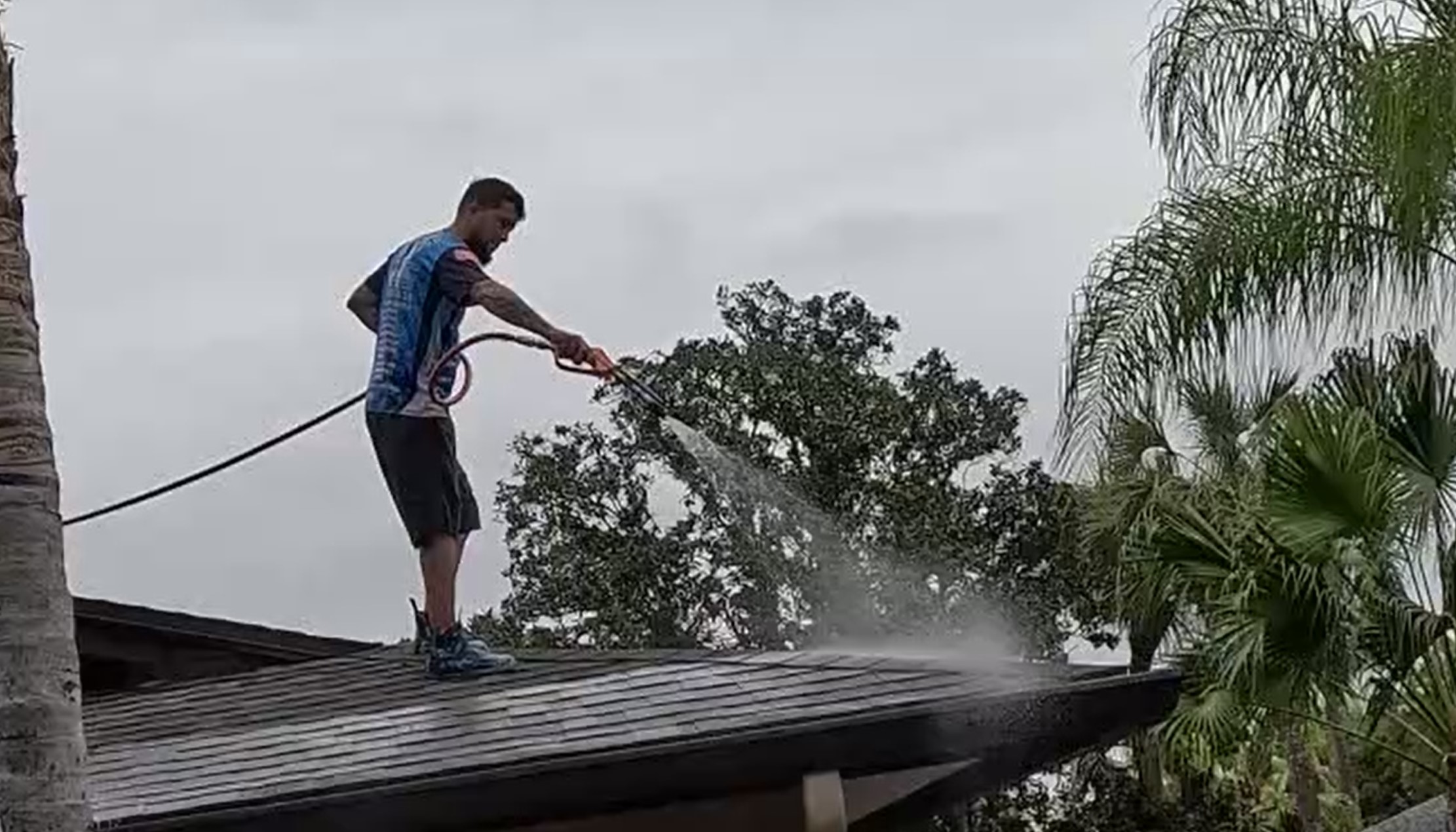
Soft washing is a gentle cleaning method that uses low pressure — roughly the equivalent of a strong garden hose — combined with specialized cleaning solutions to kill algae, remove stains, and lift grime safely from your roof.
How Soft Washing Works
- Low pressure: Usually under 100 PSI
- Special cleaning agents: Break down mold, mildew, algae, bacteria
- No abrasion: Unlike high-pressure streams, nothing scrapes or damages roofing material
- Longer-lasting clean: Treats the source of the stains, not just the surface layer
Soft washing doesn’t blast the roof — it restores it.
Why Pressure Washing Is Dangerous for Roofs
Pressure washing is extremely effective on hard surfaces… which is exactly the problem. Roofs are not designed to handle thousands of pounds of water pressure blasting against them.
Here’s why:
1. Pressure Washing Removes Protective Granules
Asphalt shingles have tiny protective granules that shield your roof from UV rays and impact damage. High-pressure washing strips those granules away. Once they’re gone, they’re gone for good — and your roof’s lifespan drops dramatically.
2. It Forces Water Under the Shingles
Pressure washers can push water:
- under the shingle layer
- into your attic
- behind protective barriers
That means moisture where moisture should never be — a perfect recipe for rot, mold, and interior damage.
3. Tile & Metal Roofs Aren’t Safe Either
Tile roofs can crack under high pressure.
Metal roofs can have protective coatings stripped away.
It’s like using sandpaper to clean your car. Sure, it’ll look clean — but the damage is expensive.
A Cautionary Tale: What Happens When Pressure Washers Meet Roofs
Homeowners and business owners often try pressure-washing their roof themselves or hire a company that simply uses the same machine they use on driveways. It feels efficient — until the consequences show up.
Imagine this scenario:
A homeowner decides to pressure wash their dark, streaky roof to “save a little money.” Everything looks great at first. The stains disappear. The shingles look brighter. Job well done… or so it seems.
But a few weeks later:
- shingles begin curling on the edges
- small brown spots appear on the bedroom ceiling
- the attic smells damp
- the energy bill creeps up due to lost insulation efficiency
Turns out the high pressure:
- blasted off protective granules
- forced water into the attic
- caused early shingle deterioration
- created the perfect environment for mold
The roof ends up needing repairs that cost many times more than the soft-wash cleaning would have.
It’s an expensive lesson — and one no homeowner wants to learn the hard way.
Soft Washing vs. Pressure Washing: A Side-by-Side Comparison
| Feature | Soft Wash | Pressure Wash |
|---|---|---|
| Pressure level | Low (safe for roofs) | Extremely high |
| Risk of damage | Very low | High |
| Removes mold/algae | Yes | Yes (but may leave root systems behind) |
| Roof lifespan impact | Protects roof | Can shorten lifespan |
| Roof manufacturer approved? | Yes | Often voids warranties |
| Long-lasting results | Yes | No — stains return faster |
Soft washing wins across the board because it cleans without causing hidden damage.
Why Soft-Wash Roof Cleaning Lasts Longer
Soft washing doesn’t just remove what you see — it kills the underlying organisms that cause roof stains.
Meet Your Roof’s Worst Enemy: Gloeocapsa Magma
This is the scientific name for the algae responsible for those black streaks on roofs throughout Florida. Pressure washing blasts the visible algae off, but its microscopic roots often remain.
Soft wash solutions kill algae at the root, which means:
- cleaner roof
- longer-lasting results
- slower regrowth
Homeowners often enjoy a clean roof for years, not months.
The Hidden Benefits of Soft-Wash Roof Cleaning
Soft washing doesn’t just make your roof look better — it protects your entire home. Here are some benefits homeowners often don’t realize:
1. Extends Roof Life
By removing damaging algae, mold, and debris without stripping away protective materials, soft washing helps roofs last longer.
2. Improves Energy Efficiency
Algae makes roofs darker, causing them to absorb more heat. A clean roof reflects sunlight and can reduce cooling costs.
3. Prevents Rot and Water Damage
Since soft washing doesn’t force water under shingles, it reduces the risk of:
- wood rot
- attic moisture
- mold growth
4. Enhances Curb Appeal
Few things improve the appearance of a home faster than a freshly cleaned roof. It instantly boosts value — especially helpful if you’re planning to sell.
Is Soft Washing Safe for All Roof Types?
Yep. Soft washing is safe and effective for:
Asphalt Shingle Roofs
This is where soft washing shines. The gentle process removes stains without damaging granules.
Tile Roofs (Clay, Concrete, Slate)
Tiles are durable but brittle. Soft washing cleans without cracking or loosening tiles.
Metal Roofs
Soft washing removes oxidation and algae without stripping the protective finish.
Cedar Shake Roofs
High pressure will destroy cedar. Soft washing lifts organic material gently.
Whatever roof you have, soft washing is the manufacturer-approved method.
What’s Actually in Soft-Wash Cleaning Solutions?
Homeowners often ask, “Is the cleaning solution safe?”
The short answer: yes — when applied by professionals.
Soft-wash solutions typically include:
- biodegradable detergents
- surfactants
- low-concentration sodium hypochlorite
- rinsing agents
These break down:
- algae
- mold
- mildew
- organic stains
- excrement (from birds and other critters)
The result is a clean, sanitized roof with no residue left behind.
Why Roof Manufacturers Recommend Soft Washing
Most major roofing manufacturers explicitly state that pressure washing voids the warranty.
Why?
Because they know high pressure:
- strips protective coatings
- wears out shingles
- weakens roof structure
- accelerates aging
Soft washing, on the other hand:
- Treats the source of stains
- Doesn’t damage materials
- Helps preserve warranty coverage
That’s why professionals — and manufacturers — choose soft washing every time.
How Often Should You Soft Wash Your Roof?
In Florida’s climate, roofs typically need cleaning every 12–24 months, depending on:
- shade coverage
- humidity levels
- amount of nearby foliage
- type of roofing material
If you live under heavy tree canopy or near a lake, you may need cleaning slightly more often.
Signs It’s Time for a Soft-Wash Cleaning
You may need service if you notice:
- black streaks
- green moss or mold
- patches of discoloration
- dingy or darkened tiles
- roof looks older than it is
- buildup around dormers or rooflines
- granules showing up in gutters
If your roof is looking tired, it might just be dirty — not damaged.
Why DIY Roof Washing Is Risky
Even with the best intentions, DIY roof cleaning often goes wrong. Here’s why:
1. It’s Extremely Dangerous
Climbing on a roof while carrying equipment and spraying slippery cleaning solutions is a fall hazard even for experienced pros.
2. Most Store-Bought Cleaners Aren’t Designed for Roofs
They may damage coatings or discolor materials.
3. Homeowners Often Use Too Much Pressure
Even “low” pressure washers can exceed safe PSI for shingles.
4. Mistakes Can Lead to Expensive Damage
Moisture intrusion, stripped shingles, and broken tiles are costly to fix.
Let the pros handle the slippery, steep, chemical-coated roof so you don’t have to.
Soft-Wash Roof Cleaning for Businesses
Commercial buildings benefit from soft washing too:
- hotels
- apartment complexes
- warehouses
- retail centers
- community buildings
- churches
- office facilities
A well-maintained roof reduces repair costs, improves curb appeal, and keeps the property looking professional.
Cost Comparison: Soft Wash vs. Replacing a Roof
Soft-wash roof cleaning costs a fraction of what roof replacement does — and often reveals that a roof still has many years left in it.
Stains don’t mean your roof is failing.
Sometimes they simply mean it needs a safe, professional cleaning.
Final Thoughts: Soft Washing Is the Safe, Smart Way to Clean Your Roof
Pressure washing may work wonders on driveways, patios, and sidewalks — but it’s simply too aggressive for your roof. Soft washing is the method roofing experts trust because it:
- protects your shingles or tiles
- prevents costly damage
- kills algae at the root
- keeps your roof clean longer
- preserves your home’s value
- works safely on all roofing types
Whether you’re a homeowner or business owner, soft washing gives you a beautifully restored roof without the risk.
If your roof is looking streaky, stained, or tired, soft-wash cleaning is an easy, affordable way to bring it back to life — safely..